


Adam and Eve Plate
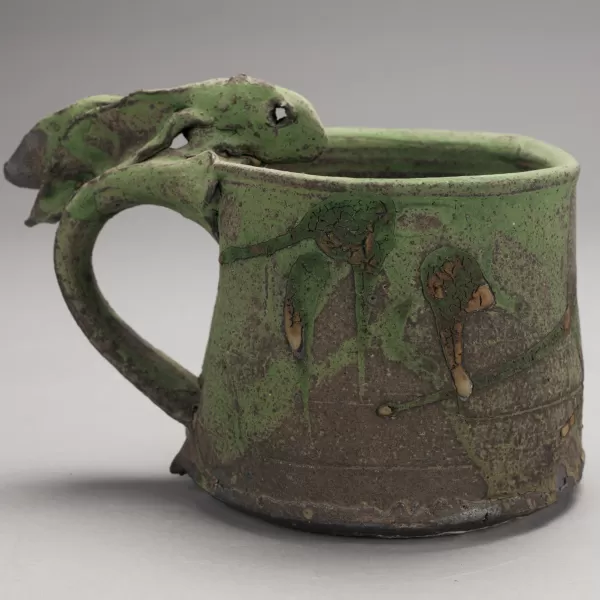
Ken Ferguson is known for wheel thrown and slab built pots. His work embodies the mid-20thcentury aesthetic shift away from purely functional vessel forms to a more expressive pot that references the functional vessel.Most of his work is high fired stoneware although he used a range of materials and techniques including, porcelain, low temperature firing, thrown, hand-built and cast ware. Occasionally he used salt or raku firing.
Much of his work draws inspiration from folklore and European, Asian and American mythology. His trip to Japan in 1973 reinforced his belief that the act of repetitive throwing of a particular form would lead to true improvisation.
He was heavily influenced by Japanese wares, both Bizen and Oribe. The Bizen pottery influence can be seen in his wood firing experiments. In order to create rich and varied surfaces, Ferguson wrapped pots in straw and dispersed salt and other organic materials around a wood-fired kiln.
Other works by Ferguson


Ferguson in other collections
TMP collaborates with the finest public and private collections of modern and contemporary American ceramics in the United States. Browse collections to learn about artists and their works. Reach out to us to become a collection partner.

Note:
These records have been reviewed by the curatorial staff but may be incomplete. Our records are frequently revised and enhanced.
Last updated: April 22, 2026
The Marks Project encourages the use of images found on this website for personal, noncommercial use, including educational and scholarly purposes. Some images may be protected by copyright and other intellectual property rights. To request permission to use an image from our website please contact info@themarksproject.org
This resource is for educational use and its contents may not be reproduced without permission. Please review our Terms of Use for more information.
