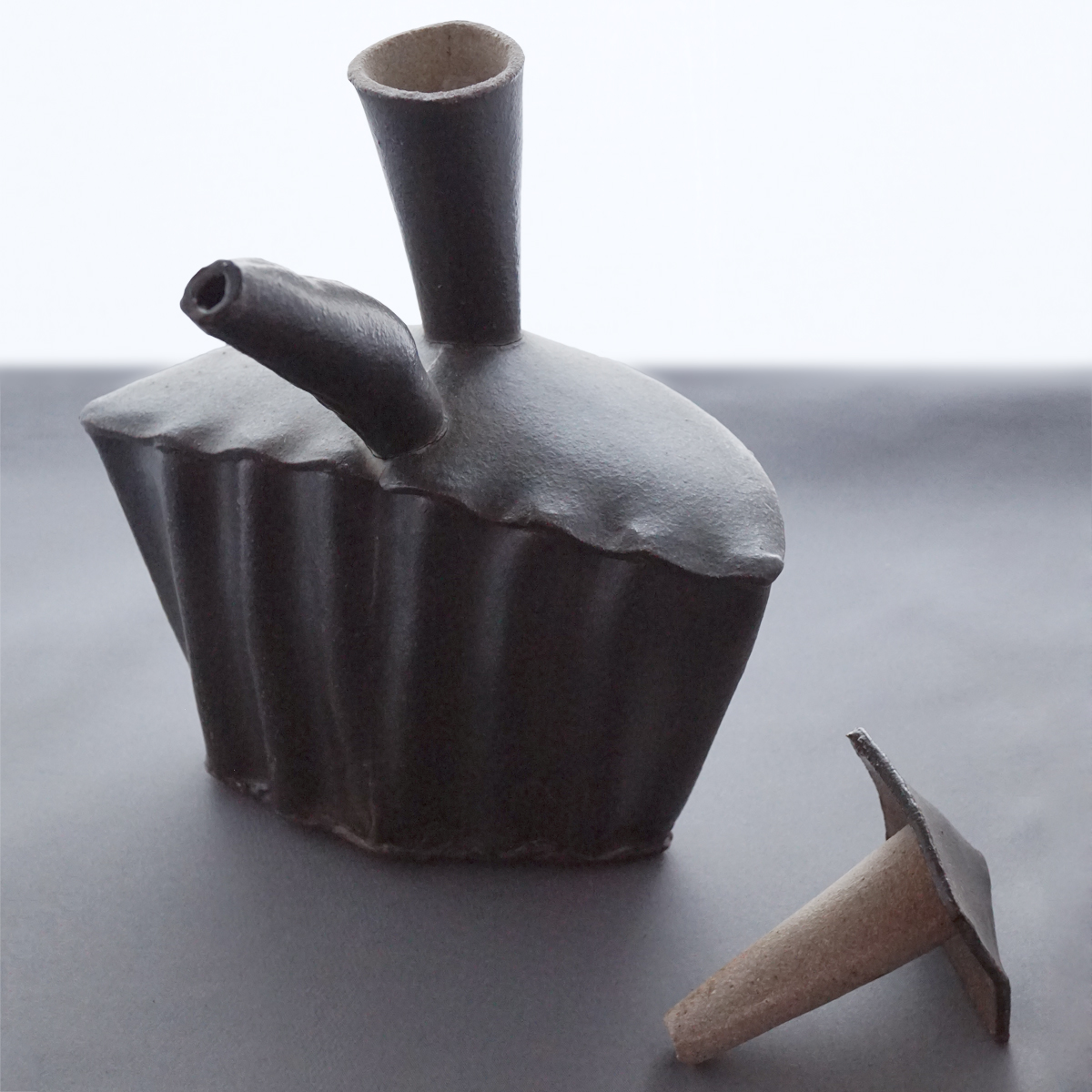

Teapot
Michael Hunt and Naomi Dalglish, of Bandana Pottery, collaborate on the production of a large collection of wood fired utilitarian pottery. They use local western North Carolina materials including local clay. The pots are thrown on a slow turning Korean-style kick wheel. Their work is often decorated using the finger swipe method where the finger is pulled through wet slip to create the surface pattern. They make and glaze the pottery together.
Hunt studied with Will Ruggles and Douglas Rankin at Penland School of Craft. He went to Korea to learn the traditional method of making large Ongii storage jars with Oh Hyang Jong a master Onggi potter. Upon returning from Korea, Michael began setting up a studio and building a large Thai wood kiln in the Penland area. Hunt is known for large jars made using the traditional Korean paddle and anvil technique (a smooth stone, the anvil, is held against the inside wall of the piece that is paddled into form from the outside, the paddle typically has a pattern carved onto its surface.).
"Other works by Pharis


Pharis in other collections
TMP collaborates with the finest public and private collections of modern and contemporary American ceramics in the United States. Browse collections to learn about artists and their works. Reach out to us to become a collection partner.

Note:
These records have been reviewed by the curatorial staff but may be incomplete. Our records are frequently revised and enhanced.
Last updated: April 22, 2026
The Marks Project encourages the use of images found on this website for personal, noncommercial use, including educational and scholarly purposes. Some images may be protected by copyright and other intellectual property rights. To request permission to use an image from our website please contact info@themarksproject.org
This resource is for educational use and its contents may not be reproduced without permission. Please review our Terms of Use for more information.
